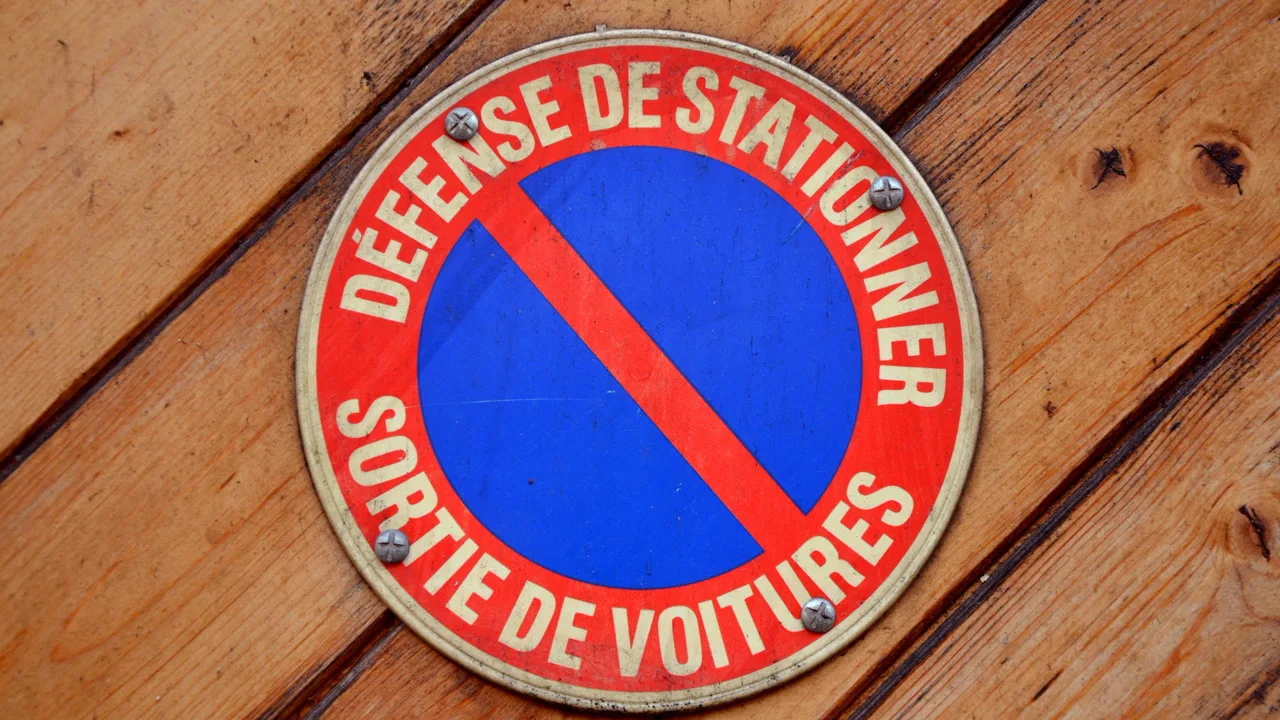
A parking fine in Tbilisi is usually GEL 50, GEL 100 for parking on a pavement and GEL 200 for using a space reserved for persons with disabilities. A speeding fine is GEL 50, 100 or 300, depending on how far you were over the limit. Both can be appealed within 10 days of receipt.
Below are the amounts under the Code of Administrative Offences, the deadlines, and what to check if you want to appeal.
Parking fines: in short
| Offence | Fine |
|---|---|
| Tbilisi: parking without paying the parking fee | GEL 50 |
| Tbilisi: breaking another parking rule | GEL 50 |
| Tbilisi: parking on a pavement or pedestrian crossing | GEL 100 |
| Tbilisi: occupying an EV charging space without charging | GEL 100 |
| Parking in a space for persons with disabilities | GEL 200 |
| Ignoring the „No stopping at fire hydrant“ sign | GEL 200 |
| Batumi: parking without paying or breaking another parking rule | GEL 50 |
| Kutaisi, Rustavi, Mtskheta, Gori, Telavi, Zugdidi, Poti, Akhaltsikhe, Ozurgeti, resorts: parking without paying | GEL 50 |
| Other municipalities: parking without paying | GEL 10 (GEL 50 for an M3, N2, N3 or T category vehicle) |
The Tbilisi rules are in Article 125², Batumi's in Article 125³ and other municipalities' in Article 125⁴. Each city council sets its own parking fee and detailed rules, so signs and zones differ from city to city.
Who issues a parking fine
Parking fines are issued not by the patrol police but by the municipality — a City Hall service or a person authorised by the city council (Article 209³ of the Code). The fine may be left on the spot or recorded by a camera. In that case the notice is sent to the person in whose name the car is registered (Article 290⁴). If someone else was using the car and that person can't be identified, the owner pays.
When your car can be towed
- In Tbilisi a car may be towed to a special car pound or clamped if it has stood unpaid for more than 12 hours, or stands in a charging space or a space for persons with disabilities — if the sign says so
- A car on a pavement, a pedestrian crossing or by a fire hydrant can be towed even without such a sign
- To get the car back you need the receipt for the towing and storage fee, the vehicle registration certificate (or a power of attorney) and an ID document
How to check and pay
- If the notice couldn't be delivered by post, it is sent again within 30–60 days, then published on the municipality's website and counts as delivered on the 30th day after publication (Article 290⁴)
- The fine must be paid within 30 days of receipt
- If you pay a camera-recorded fine within 10 calendar days (of the SMS or of the notice being issued), it is reduced by 20% (Article 290⁵)
- People often use protocols.ge to find municipal fines; Tbilisi also has its own parking website. You pay by the notice number through a bank app or a payment terminal
If you don't pay a parking fine
- In Tbilisi, after 30 days a surcharge is added — twice the fine (GEL 200 for parking in a space for persons with disabilities)
- In Batumi and other municipalities the surcharge is GEL 150 (GEL 200 for a space for persons with disabilities)
- If the fine and surcharge are still unpaid after the next 30 days, enforcement begins; for Batumi the Code directly provides for the car to be sold
Speeding fines
| Offence | Fine |
|---|---|
| Over the limit by 15–30 km/h | GEL 50 |
| Over the limit by 30–50 km/h | GEL 100 |
| Over the limit by more than 50 km/h | GEL 300 |
| Speeding while running a regular passenger service (e.g. a minibus) | GEL 400 |
| Speeding that created an emergency situation | GEL 400 |
| Speeding that caused minor damage to a car, property or a person | GEL 600 |
These amounts are in Article 125 of the Code. Under this article there is no fine for going up to 15 km/h over the limit. Under Article 33 of the Law on Road Traffic, the limit is 60 km/h in any populated area (town or village) and 20 km/h in residential zones. Outside populated areas a category B car may go up to 90 km/h, and 110 km/h on a motorway; with a light trailer — 80 km/h. This applies unless a sign says otherwise.
Cameras and average speed
- Speeding is not checked only at one point: the average speed between two cameras is also measured, from the distance and the time taken (note to Article 125)
- A camera fine is paid by the person in whose name the car is registered, or by the lessee if the car is leased (Article 290¹)
- If you pay within 10 calendar days of the SMS or of the information on the Ministry of Internal Affairs website, the fine is reduced by 20% (Article 268¹)
- After 30 days a surcharge is added — twice the fine, but no more than GEL 500 (note to Article 125)
- If a camera fine and the surcharge are not paid within 30 days of the surcharge, the car is sold in the way set by law. If the fined person is not the car's owner, the fine is enforced by force (Article 290¹)
- If an on-the-spot (patrol) fine and its surcharge are not paid in time, your driving licence is suspended for 6 months (Article 290)
How to appeal
- Deadline — 10 days from receiving the decision or notice. A deadline missed for a valid reason can be restored (Article 273)
- First you complain to the higher authority, and its decision can then be appealed in court (Article 272); where to apply is stated in the notice or decision
- An appeal filed on time pauses enforcement of the fine until it is decided (Article 275). There is no state fee
- Check: whether the sign and road markings were clearly visible, whether you paid for parking (keep the payment history), whether the plate number, time and place are correct, and whether the photo really shows the offence
How we help
- We check the fine, the photo and the deadlines and tell you whether an appeal is worth it
- We prepare and file the appeal within 10 days
- We represent you before the higher authority and in court
- We help with surcharges, a towed car or a licence suspension
Legal basis
Official texts (in Georgian) — Legislative Herald of Georgia, matsne.gov.ge.
Important: this article is general information based on the law in force on the date it was published.
Laws change and every case is different, so it doesn't replace advice from a lawyer. Before you act on it, contact us. MMLAW is not responsible for decisions made solely on the basis of this article.
Get a consultation